
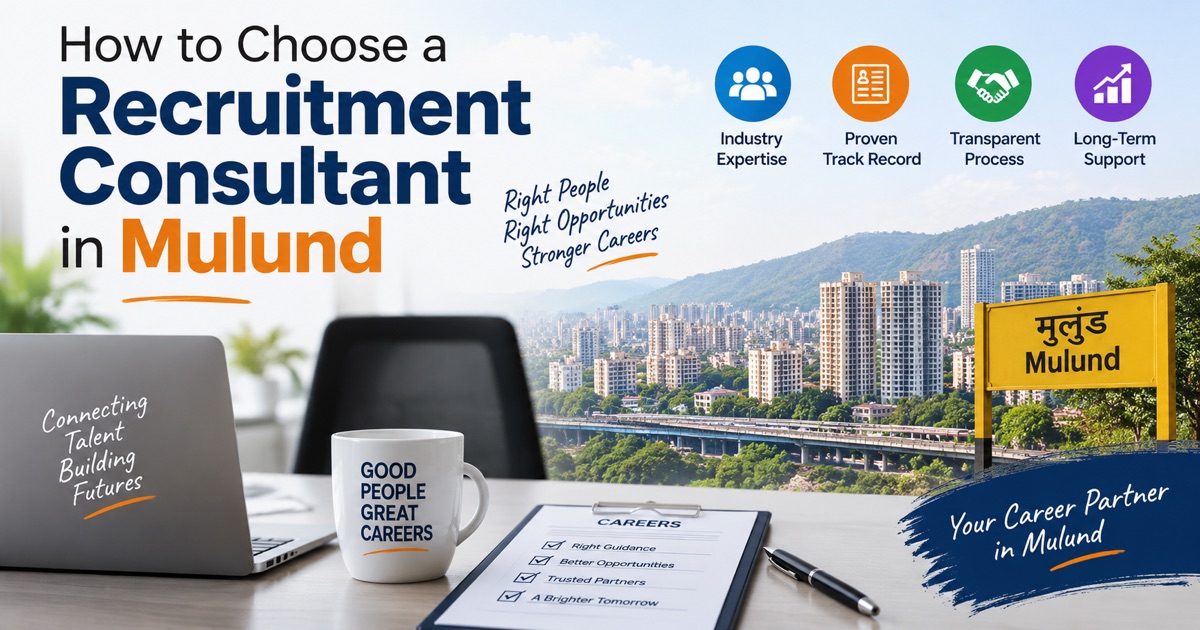
Mulund has one of the densest clusters of recruitment consultancies in Mumbai — walk along JSD Road or near the railway station and you'll find several within a few minutes of each other. That's good for choice, but it also means picking the wrong one wastes time whether you're a candidate looking for a role or an employer trying to fill one. Here's what actually matters.
1. How Long Have They Actually Operated Locally?
A consultancy with years of real, continuous history in Mulund has built relationships with local employers that a newer entrant simply hasn't. Ask directly, or check their "years in business" if listed on their Google Business Profile — this is usually verified by Google, not just a claim.
2. Do They Specialize, or Handle Everything Generically?
Consultants who focus on specific industries — banking, insurance, IT, BPO — tend to understand what employers in those sectors actually need, and can match candidates more precisely than a generalist handling every industry at once. Ask what sectors they place most candidates in.
3. Is the Process Transparent?
A good consultant explains clearly: which company you're being considered for, what the role actually involves, expected salary range, and next steps at each stage. If a consultant is vague about the employer's identity until very late in the process, or gives inconsistent information, that's worth noticing.
4. Do They Ever Ask Candidates for Money?
This is the single most important check. In India, legitimate recruitment consultants are paid by the hiring employer, not the candidate. Any consultant asking you to pay a "registration fee," "processing fee," or similar before being placed is not operating legitimately — walk away.
5. What Do Recent Reviews Actually Say?
Look past the star rating and read a handful of recent written reviews. Genuine reviews usually mention specific details — a role, a timeline, how communication felt — rather than generic praise. A large number of very recent, very similar-sounding reviews can sometimes indicate incentivized reviews rather than organic ones.
6. For Employers: Do They Understand Your Actual Requirement?
A consultant who asks detailed questions about your team structure, culture, and the specific skills the role needs — rather than just requesting a generic job description — is more likely to send candidates worth interviewing, saving you screening time later.